
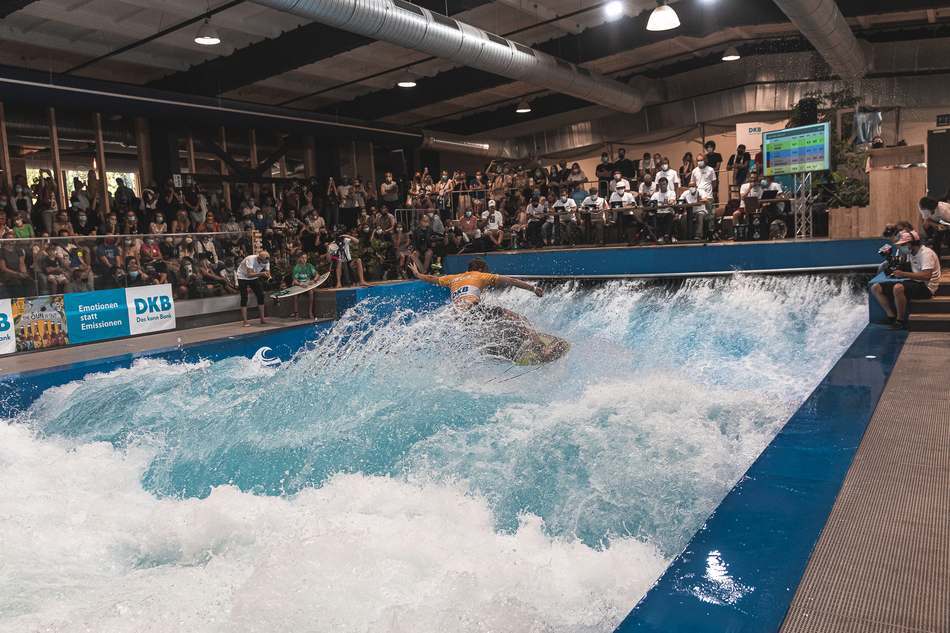
In 2020, Wellenwerk brought the German Championship in indoor surfing to Berlin, still the only time the national championship has been held in the capital. What makes rapid surfing a sport, and how a contest day on the standing wave unfolds.
A competition you won’t find anywhere else in Berlin
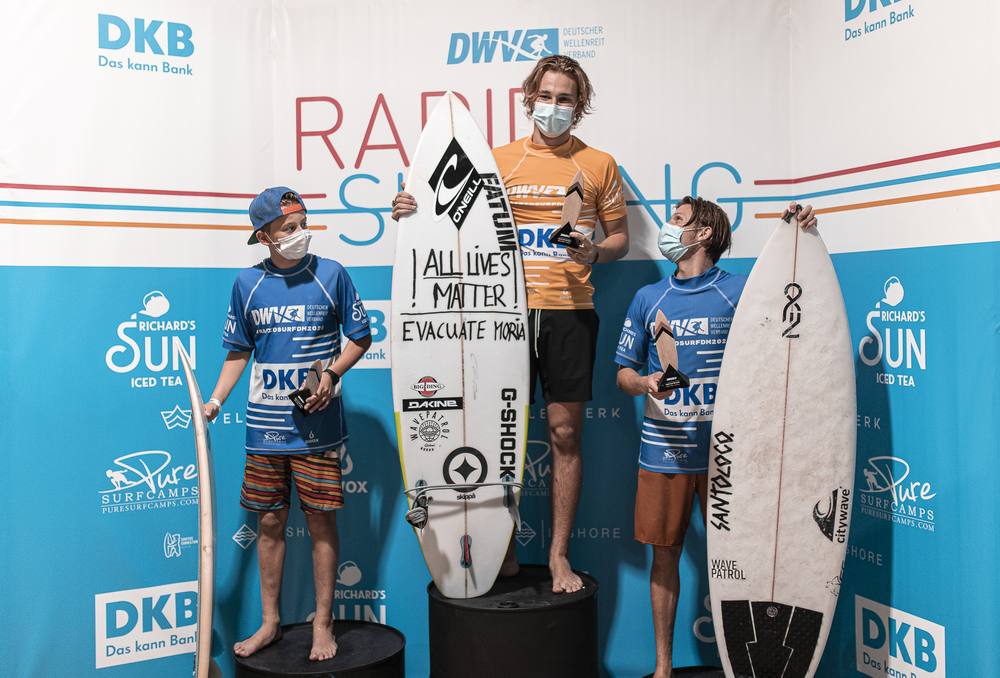
In 2020, Wellenwerk hosted the German Championship in indoor surfing, on a standing wave, right in Lichtenberg instead of on a beach. The event took place on September 21, 2020, in partnership with the German Wave Surfing Association, and remains the only German Championship held in Berlin to date. The event was backed by a whole roster of sponsors from the surf and outdoor scene, including DKB, Richards Sun, Swox, Pure Surf Camps, OY Surf Apparel, G-Shock, Surfers Connection Berlin and Inshore Films, a sign that rapid surfing is now taken seriously as a competitive format.
Looking back, the team itself was overwhelmed: “What an incredible weekend!”, with thanks to the athletes, all the volunteers, and the spectators both on site and watching the livestream. That’s exactly what sets an indoor competition apart from a contest in the ocean: the wave keeps running constantly, regardless of tide or weather, and every athlete gets exactly the same conditions as the competitors before and after them.
Besides the German Championship, Wellenwerk also runs its own contest, the Berlin Surf Open, more on that in the article Berlin Surf Open: our home contest goes into series.
The German Championship has so far only taken place in Berlin that one time. Still, the contest spirit has stuck around: with the Berlin Surf Open and tour stops like the o2 SURF MASTERS, Wellenwerk regularly brings competition back to its own wave.
What is rapid surfing, exactly?
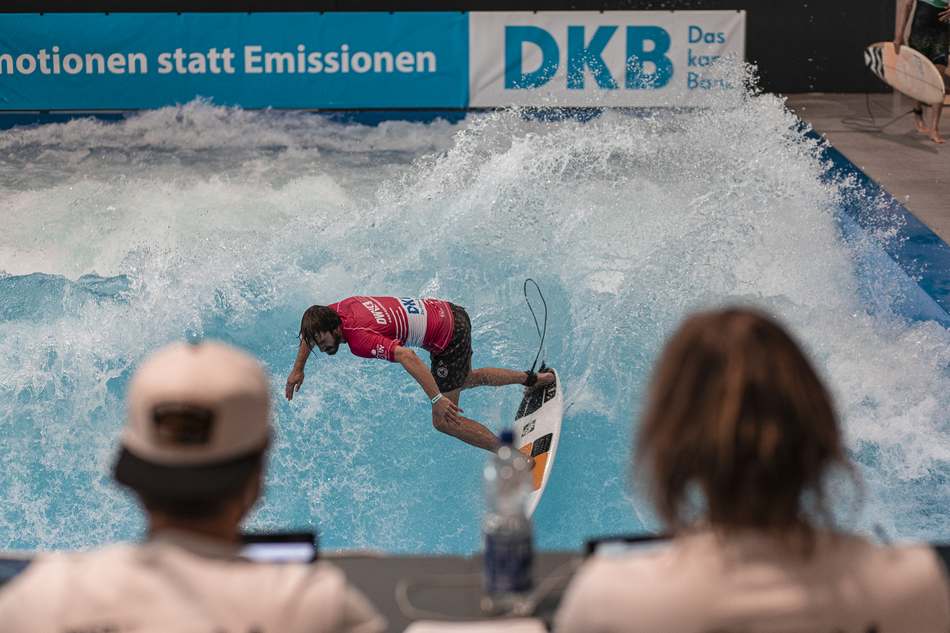
Rapid surfing is the name for riding an artificial, standing wave like the citywave at Wellenwerk, as opposed to classic surfing on the open ocean, where the wave moves and the surfer moves toward it. On a standing wave, it’s the other way around: a continuous stream of water flows past a fixed spot, while athletes ride turns, airs and other tricks on that current, tricks that compare directly, in technique and look, with ocean surfing.
That exact transferability is what makes rapid surfing appealing to many ocean surfers: the citywave’s wave height and flow speed can be adjusted steplessly, so the same facility works for beginners and competitive pros alike. You can read more about the technology behind the wave in the article How does the citywave work?
The exact scoring criteria for a contest, such as the points system, time window per heat, and number of scoring rides, are confirmed by the team or the federation on a final basis.
What makes a contest day at Wellenwerk
On a competition day, the hall transforms: instead of individual sessions, a tightly scheduled contest runs with heats, spectators at the pool edge, and a livestream for everyone who can’t be there in person. The exact schedule of a contest day, number of heats, age and level categories, will still be confirmed by the team for this section. What stays the same across every edition: the standing wave itself, offering every competitor exactly the same conditions.
Train at competition level yourself
Don’t just want to watch, but train toward contest level yourself? In the Training Sessions you’ll work on lines, turns and speed with coach feedback, either the classic 60 minutes or an intensive small-group format. There are also occasional intensive coaching sessions with pro surfers like ISA surf coach and German champion Valeska Schneider, announced via the newsletter. If you’re still right at the start, you’ll find the right entry point on the Indoor Surfing page.
← Back to the Magazine